Dyed Film vs. Ceramic Film: The Real Difference for Kansas City Drivers
Two trucks roll out of a tint shop on the same afternoon. Both look identical — clean, dark, sharp. But come July in Kansas City, one driver climbs into a cabin that's noticeably cooler, while the other is still blasting the AC and wondering why his tint "isn't working."
The difference isn't the shade. It's what's inside the film.
If you're comparing window tint options in Parkville, Platte Woods, or anywhere in the Kansas City metro, the dyed-versus-ceramic question is the single most important one to understand before you spend a dollar. Here's the honest breakdown — including exactly which films we install at Legacy Tint & Audio and who each one is actually right for.
How Dyed Window Tint Works
Dyed film is the original window tint: layers of dye sandwiched between an adhesive layer and a protective top coat. The dye darkens your glass, which delivers three real benefits:
- Privacy — a darker cabin keeps eyes off you and whatever's in your back seat
- 99% UV protection — quality dyed film blocks ultraviolet rays, protecting your skin and slowing interior fading
- A clean, finished look — the appearance upgrade is immediate
Here's what dyed film doesn't do, and where a lot of shops aren't straight with you: dyed film absorbs heat rather than rejecting it. The dye soaks up solar energy into the glass instead of bouncing it away from the vehicle. Some of that heat still radiates into your cabin. On a 95-degree Kansas City afternoon, a dyed-film vehicle and a bare-glass vehicle feel a lot more similar inside than most people expect.
Dyed film is also the tier most prone to aging. Lower-quality dyed films are infamous for turning purple and bubbling after a few summers — though a quality film professionally installed (like our Standard tier) holds its color far better than the bargain stuff.
Who dyed film is right for: drivers whose priorities are looks, privacy, and UV protection on a budget. That's a legitimate choice — we just want you making it with accurate expectations.
How Ceramic Window Tint Works
Ceramic tint is a different technology entirely. Instead of dye, the film is embedded with microscopic, non-metallic ceramic particles engineered to do one thing exceptionally well: reject infrared heat before it enters your vehicle.
Infrared (IR) is the part of sunlight you feel as heat. Where dyed film absorbs it, ceramic film reflects and blocks it — which is why a ceramic-tinted vehicle is measurably, immediately cooler inside. The benefits stack up:
- Real heat rejection — the difference you actually feel every time you get in
- 99% UV protection — same complete UV blockage as dyed film
- Color-stable — ceramic particles don't fade or turn purple
- No signal interference — unlike old metallic films, ceramic doesn't affect GPS, cell, or radio reception
- Less AC strain — your system cools the cabin faster and works less to keep it there
And because ceramic performance comes from the particles rather than the darkness, you don't need the darkest legal shade to get the benefit — a lighter ceramic film can outperform a dark dyed film where it counts.
The Films We Install at Legacy Tint & Audio
We're a three-tier shop, and we'll always tell you plainly what each film does. Our two ceramic tiers:
Signature Tier: IRFX Ceramic Film
Our IRFX entry-level ceramic delivers 99% UV rejection and 62% heat rejection — genuine ceramic performance at a daily-driver price. For most commuters in Parkville, Liberty, Gladstone, and across Kansas City, this is the sweet spot: a cabin that's noticeably cooler all summer, film that never fades or discolors, and zero interference with your electronics. It's our most popular tier for a reason.
Legacy Premier Tier: FX Plus Nano-Ceramic Film
FX Plus is where ceramic technology peaks. Nano-ceramic film uses smaller, more densely packed ceramic particles than standard ceramic — pushing heat rejection to 96%, with the same 99% UV protection. That's near-total heat blockage.
This is the film for drivers who keep their vehicles long-term, park outside, have leather or premium interiors to protect, or simply want the best available. On a Kansas City July afternoon, the difference between bare glass and FX Plus nano-ceramic isn't subtle — it's the difference between a cabin you brace yourself for and one you just get into.
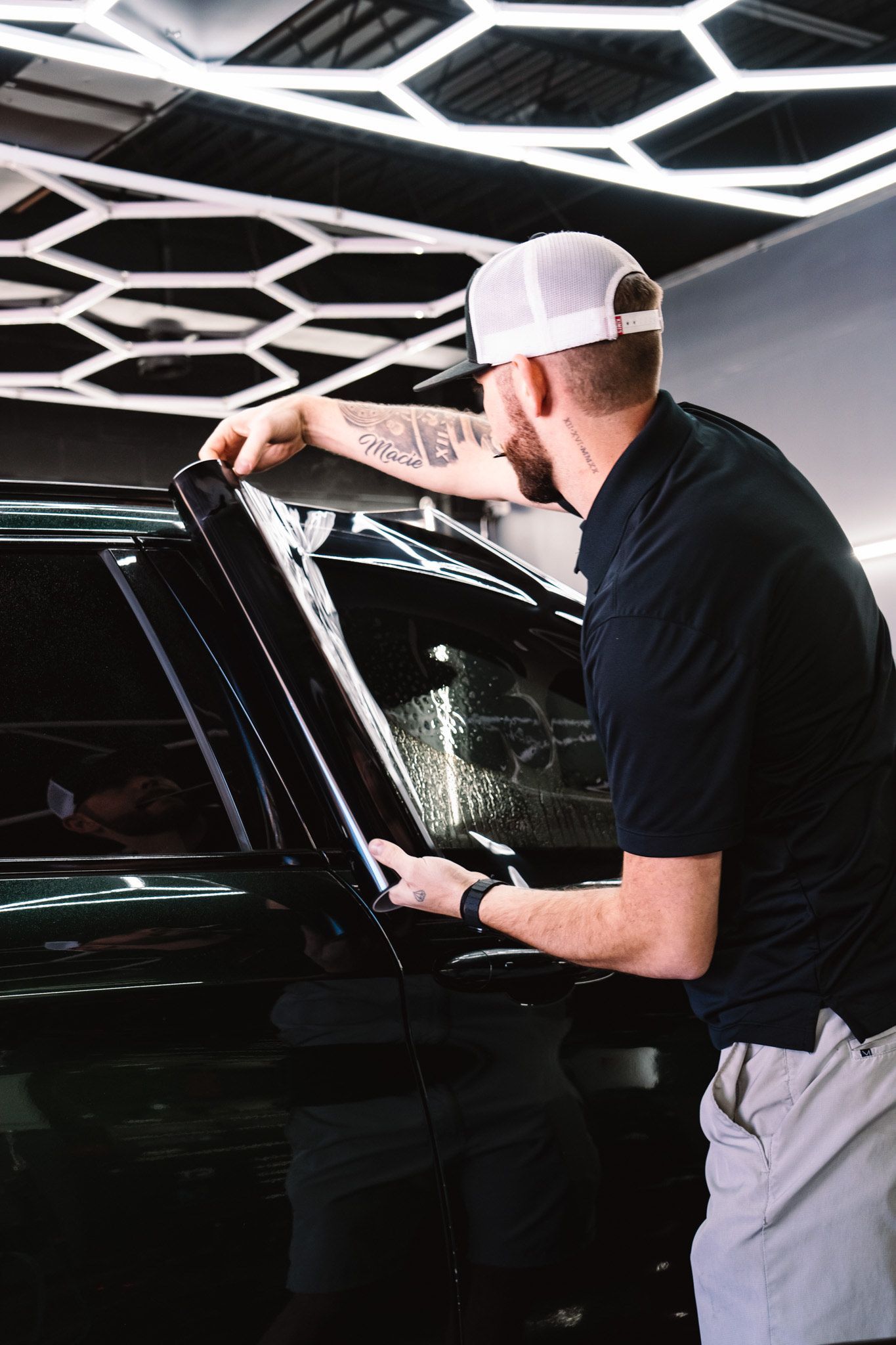
Every tier we install — dyed, IRFX ceramic, or FX Plus nano-ceramic — is backed by a lifetime warranty on film and labor and installed by factory-trained installers in our professional shop in Platte Woods, minutes from Parkville.
So Which Should You Choose?
Here's the honest framework we use with every customer at the counter:
If your goal is appearance and privacy and a cooler cabin isn't a priority, dyed film does that job at the lowest price.
If you want your vehicle to actually feel different in the summer, ceramic is where that happens — full stop. For most Kansas City drivers, IRFX ceramic is the right call.
If you're keeping the vehicle for years, park in the sun, or want it done once at the highest level, FX Plus nano-ceramic is the film you'll never second-guess. It's what we'd put on our own trucks — and do.
The one thing we'll never do is let you buy dyed film expecting ceramic performance. Honesty in the quote is the whole point of how we do business.
Get Tinted by the Northland's Ceramic Specialists
Legacy Tint & Audio has been installing window tint in the Kansas City Northland since 2014 — serving Parkville, Platte Woods, Liberty, Gladstone, Riverside, and beyond from our professional shop. Most vehicles are done same-day.
Call (816) 287-8592 or request a quote at legacytintandaudio.com — we'll give you a straight answer on which film fits how you drive.
Legacy Tint & Audio — Bringing Quality Back.
Share On: