Is Paint Protection Film Worth It? An Honest Look for Kansas City Drivers
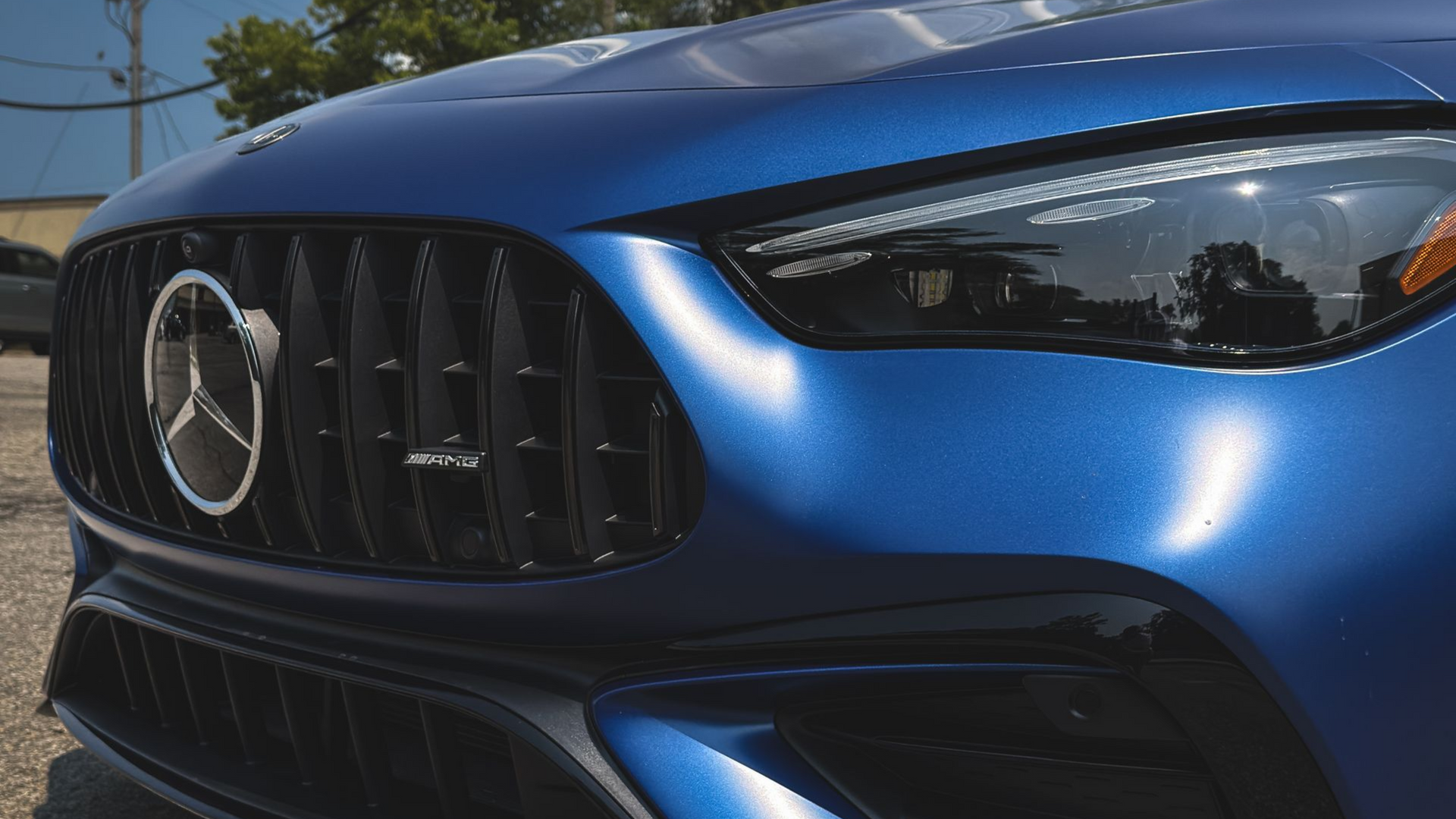
If you've bought a new vehicle in the last couple of years, someone has probably mentioned paint protection film — and you may have walked away not entirely sure what it is, what it does, or whether the price tag is justified.
Fair questions. So let's answer them plainly, without the sales pitch, and with the one thing most of these articles leave out: what our roads here actually do to your paint, and where film earns its money versus where it doesn't.
First, what paint protection film actually is
Paint protection film — you'll also hear it called PPF or a "clear bra" — is a clear, thick, flexible urethane layer applied over your vehicle's factory paint. Once it's on and cured, it's effectively invisible. You have to be looking for the edge to find it.
It isn't a wax, a sealant, or a coating you buff on. It's a physical film, measured in mils of thickness, that takes the abuse your paint would otherwise take. Think of it as a screen protector for your vehicle's most vulnerable panels.
And here's the part that surprises people: modern film heals its own light scratches. Fine swirls and surface marks disappear with heat — a warm day, hot water, or a heat gun. If your mental image of PPF is the yellowed, cracked plastic you saw on a car in 2008, that material has been off the market for years. Today's film stays clear.
Why this matters more in the Midwest than almost anywhere else
Most articles about paint protection film are written for California. They talk about track days and canyon roads and keeping a supercar pristine. That's not most of us.
Here's what actually threatens your paint around Kansas City:
Winter chemicals. Before a storm even arrives, road crews pre-treat the highways with brine. Then salt and sand go down behind it. That mixture doesn't politely stay on the road — it comes off the tires of the truck ahead of you on I-29 or I-35 as a gritty, corrosive spray that hits your front end at highway speed, every single commute, all winter.
Spring gravel. The same freeze-thaw cycle that cracks the roads all winter turns the surface to loose aggregate by March. Potholes get patched, patches break loose, and everything behind a vehicle gets peppered. Chip seal on the county roads out past Smithville and northern Platte County adds even more loose stone.
Constant highway grit. If your commute runs I-29, I-35, or I-70 — and around here, it does — you're behind semis throwing debris for a good part of the year, plus whatever the metro's endless construction zones kick up.
By its second or third summer, a vehicle that lives outside and drives these roads has a hood and bumper stippled with tiny white chips. No detailing brings that back. That's the specific problem paint protection film is built to prevent.
The real benefits, ranked by what matters
Let's go through what film actually delivers — honestly, including where the value is strongest.
1. It stops rock chips and road debris
This is the whole reason it exists. A stone that would chip bare paint deforms the film instead. Your bumper, the leading edge of your hood, your fenders, and your mirrors take the overwhelming majority of impacts, and those are exactly the panels film protects first. For a daily driver on Kansas City highways, this alone is usually the justification.
2. It guards against salt and chemical damage
Road salt and brine are corrosive. Film puts a barrier between those chemicals and your clear coat, so the winter slurry sits on the film instead of working on your paint. Combine that with regular winter washing and you've dramatically slowed the process that ages a front end.
3. It protects resale value
This is the benefit people underestimate. When you sell or trade a vehicle, front-end chips and swirl marks read as neglect and pull down the offer. A vehicle whose paint still looks new commands more — and because film is removable, it comes off cleanly at sale time and reveals factory paint that's been protected the whole time. On a vehicle you plan to keep and sell, film can pay for itself in the resale conversation alone.
4. It self-heals and stays glossy
The everyday haze that dulls a hood — light wash swirls, fine scratches — disappears from film with heat. Your paint doesn't do that. Over years, that's the difference between a front end that still looks sharp and one that's gone flat.
5. It makes washing easier
Film's smooth topcoat sheds dirt and bugs more easily than bare paint, and it resists staining from bird droppings, tree sap, and bug acid — all of which are worse in summer than people expect.
The honest part: where film isn't the answer
A good shop tells you the limits, so here they are.
Film stops chips and abrasion — not dents. A serious impact will still dent a panel, and a large enough rock at highway speed can tear film. It's protection, not armor.
It can't fix existing damage. Film goes over what's already there. If your hood is already chipped, the film seals those chips in. The ideal time to protect a vehicle is when it's new — which is exactly why dealerships bring it up at purchase.
You probably don't need the whole car. This is where a lot of shops oversell. Most drivers get the most value from a full front — bumper, full hood, fenders, mirrors, headlights — because that's where nearly all the damage lands. Full-vehicle film is real, but it's for a specific buyer: new performance cars, collector vehicles, and anything with paint that's hard or expensive to match. For most Kansas City daily drivers and trucks, protecting the front end is the smart spend.
Should you add ceramic coating too?
Short version: they do different jobs, and the strongest setup uses both.
Ceramic coating gives you gloss, water beading, easier washing, and chemical and UV resistance — but it's a microscopically thin chemical layer. It will not stop a rock. Nothing about its thickness makes that possible.
Paint protection film stops rocks, salt grit, and abrasion. It's mechanical protection.
The combination most of our customers land on is film on the impact zones — the front end, and often the rocker panels and rear wheel arches that catch salt spray here — with ceramic coating over the entire vehicle, including on top of the film. You get impact protection where the impacts happen and gloss plus easy cleaning everywhere, which matters a lot when you're washing salt off all winter.
What a professional install actually involves
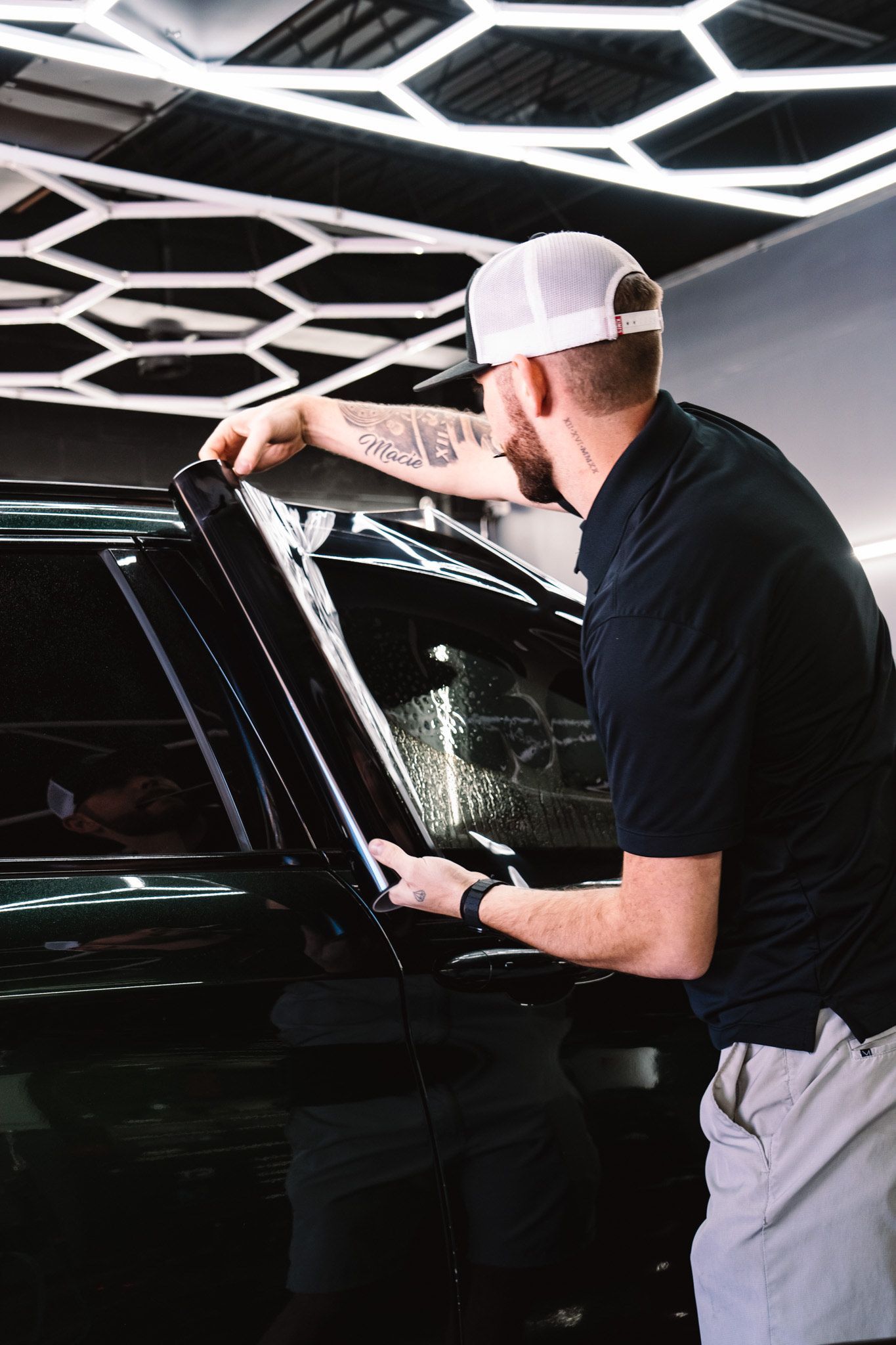
Not all film jobs are equal, and the difference shows up within a season. A proper install means:
- The paint is decontaminated first — washed, chemically decontaminated, and clayed. Anything left on the paint gets sealed under the film permanently.
- Light correction where needed, because film magnifies whatever is beneath it.
- Computer-cut patterns for your exact year, make, and model.
- Wrapped edges where the panel allows, so there's no exposed film line collecting road grime and lifting.
- An enclosed, clean bay. Dust is the enemy of a clean install, and film applied in an open lot will show it.
Cheap film and rushed installs yellow and lift at the edges — which ends up looking worse than the chips you were trying to prevent. This is a case where the quality of the work is the entire value.
Serving Kansas City, Parkville, Liberty & Smithville
We install paint protection film out of our shop in Platte Woods, right off I-29 in the Northland, and we see the road damage in this area up close every day.
Kansas City drivers put on the worst-case highway miles — salted interstates, semi traffic, and construction grit for much of the year. If your commute is on I-29, I-35, or I-70, full front coverage is almost always the right call.
Parkville drivers deal with the bluff roads and chip seal along 9 Highway and the 45 corridor, and a lot of Parkville customers add rocker and rear-arch protection after their first winter, once they've seen where the grit actually lands.
Liberty drivers run the I-35 and 152 corridor, a genuine gravel gauntlet come spring — and Clay County trucks that tow catch it from the front and from below at the same time.
Smithville drivers face gravel county roads and lake traffic. If you tow a boat out to Smithville Lake, your front end catches everything the road throws, and backing a trailer down a gravel ramp is exactly the kind of low-speed grit exposure people forget to protect against.
So — is it worth it?
For a vehicle you drive daily on Kansas City roads and plan to keep, and especially one that's new or newer: yes, and the front-end package is usually the sweet spot. For an older vehicle already carrying chips, the honest answer is that the value is lower and worth a real conversation first.
That's the conversation we'd rather have with you than sell you something you don't need. Bring the vehicle by, tell us how and where you drive, and we'll tell you straight what coverage actually makes sense — often less than you'd expect.
Call or text (816) 287-8592, or request a quote online. We'll walk you through it.
Legacy Tint & Audio installs paint protection film, ceramic coating, window tint, and more from Platte Woods, MO, serving Kansas City, Parkville, Liberty, Smithville, and the greater Northland. Honesty, integrity, gratitude, humility — bringing quality back.

Share On: